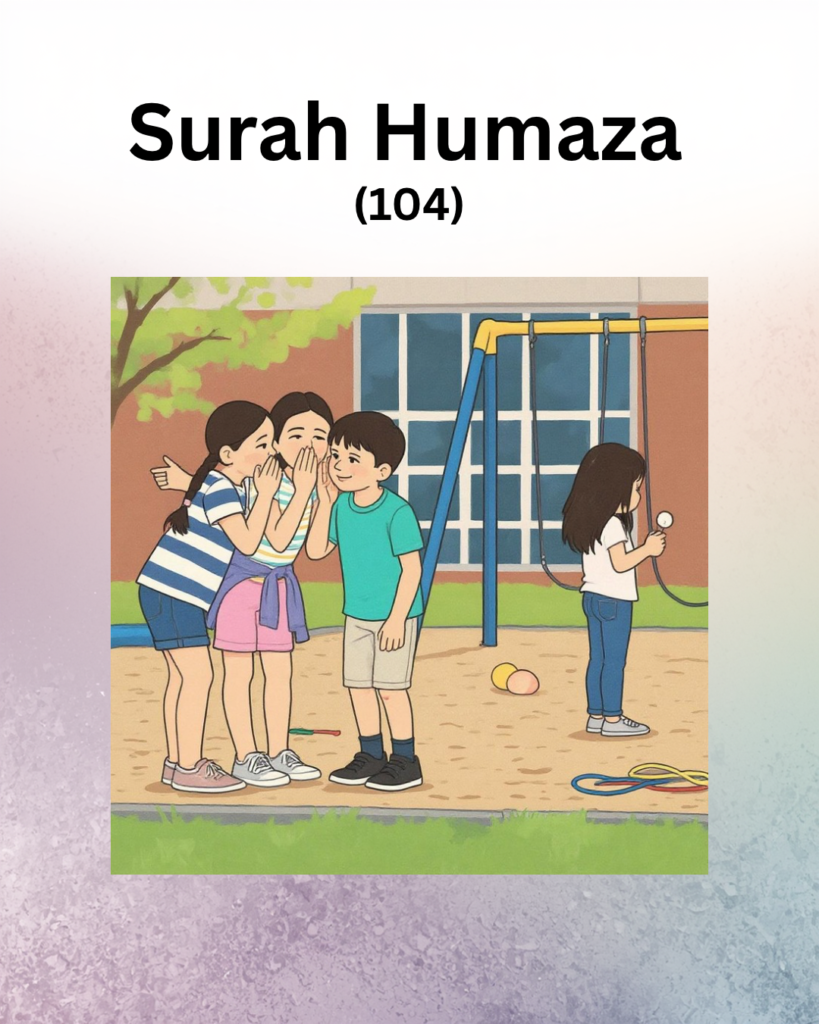
Surah Humaza (104) is one of the short suwer from Juz Amma, consisting of 9 ayat.
Surah Humaza is a reminder that being rich doesn’t make someone better than anyone else. It’s wrong to treat people unkindly, make fun of them, say mean things, or gossip behind their backs.
Occasion of revelation
Surah Humaza was revealed to address the wealthy, arrogant leaders in Makkah (such as Walid ibn Mugheera or al-Akhnas ibn Shurayq) who felt superior because of their wealth. These individuals used their status to mock, gossip and insult others, particularly Prophet Muhammad (sww) and his followers.
In response to this behavior, the Surah opens with a severe warning (“Woe to every scandal monger and slanderer”) and describes a terrible punishment for those who think their wealth makes them untouchable or better than others.
While the surah may have been revealed due to specific historical bullies, its message is universal. It teaches that:
• Wealth and social class do not make a person “better”
• Slander, backbiting, and mockery are serious sins
• The condemnation applies to anyone who behaves this way, regardless of who they are or when they live
Sharing Surah Humaza with children:
At the time of the Prophet, there were some very rich leaders (Walid ibn Mugheera or al-Akhnas ibn Shurayq) who thought they were better than everyone else. Because they were so proud of their money, they started being mean to others. They would make fun of people, spread rumors, and whisper secrets behind their backs to make them feel small. They even did this to Prophet Muhammad (sww).
To show that this was wrong, a special Surah of the Quran was revealed. It starts with a very strong warning: “Woe to every person who mocks and gossips.” It tells us that even if someone is rich, they will be in big trouble if they act like a bully.
• Words matter: Using your voice to tease or tell secrets about others is wrong
• A Lesson for Everyone: This story wasn’t just for those people of the past; it’s a warning for all of us today. No matter how much we have, we must be kind and respectful to everyone
Activity for children:
Put on your thinking caps and find three things about a friend that are “treasures” but don’t cost any money (for example: they are a fast runner, they are a good listener, or they have a great laugh).
This helps children see that a person’s value comes from their character, not their toys or clothes.
- Next: The Merits of Reciting Surah Al-Humazah → surah-al-humazah-for-kids-merits-and-rewards (Post 2)